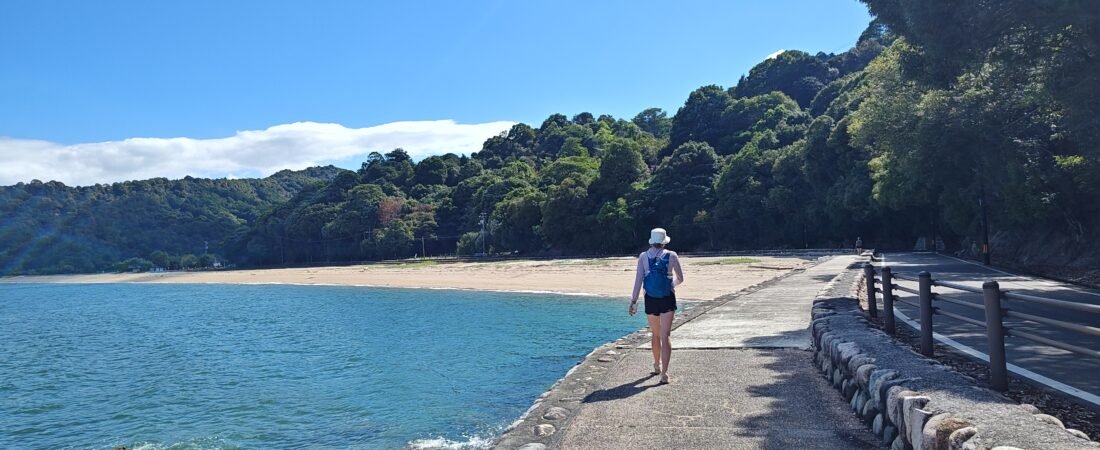
Miyajima is a mountainous island off the coast of Hiroshima, known primarily for its “floating shrine,” unique maple leaf cookies, and ropeway to the top of Mt. Misen. Its shores boast white sandy beaches, as well as dramatic rock formations, but do the crowds make it too hard to get around? Is it worth the precious day trip from history-clad Hiroshima?
In short, yes, traveling to Miyajima is worth it, but there are certain tricks to keep in mind that make the trip much more enjoyable.
Where Is Miyajima, Exactly?
Miyajima, also known as Itsukushima (it’s named this on Google Maps), is a small island in Hiroshima Prefecture, but not directly in Hiroshima city itself. From the city, you’ll have to travel by bus, and a short 10-minute ferry to Miyajima.
How to Get to Miyajima
Traveling to Miyajima requires a 25-minute train ride and a short 10-minute ferry. From Hiroshima Station take the Sanyo Line towards Iwakuni on platform 1. This is a local train that takes you directly to the ferry terminal — you’ll ride for about 25 minutes and get off at Miyajimaguchi Station.
Once at the terminal, you can pay for the ferry, which is run by transit company JR, with cash, card, or any IC card. You walk on, walk off, right into the heart of the island.
Getting Around: Walk, Bus, Bike, or Drive
Miyajima is very accessible by foot, including the town area, the torii gates, and Mt. Misen. From the ferry to the shrine it is an 11-minute walk. The town is a similar distance away.
From the ferry terminal to the beginning of the Mt. Misen trail, it is a 15-minute walk, while getting to the ropeway is 21 minutes from the terminal.If you want to leave the main areas, buses run in the busy season and bike rental shops are available.
We visited the island during Silver Week in late September, and the buses were not running. Make sure to check in advance that the buses are in season if you plan on using them.
I recommend renting bikes, or e-bikes, if you plan on visiting elsewhere, including Tsutsumigaura Beach and Kashikiura Beach. Walking to Tsutsumigaura Beach is 40 minutes one-way, while walking to Kashikiura Beach is 2 hours and 26 minutes.
Traveling by car is not a common option, but there is paid parking at the terminal, and Tsutsumigaura Beach has parking as well.
Ropeway or Hike? Getting Up Mt. Misen
Mt. Misen offers a spectacular view over Hiroshima and beyond. It’s certainly worth getting to the top. Choosing between the ropeway or a hike depends on whether you want to pay for the view, or sweat to get it.
The hike is about 2 miles (3.2km) to the top, while the ropeway will cost you 2,000 yen for a round trip, and 1,100 yen for one way. Many people were choosing to take the ropeway up, and walk down.
While we were there, the tickets were sold out, but you can avoid this by purchasing them online here. You’ll also want to keep in mind the ropeway is open from 9:00am to 4:00pm, which is earlier than most expect!
Check the Tides Before You Go
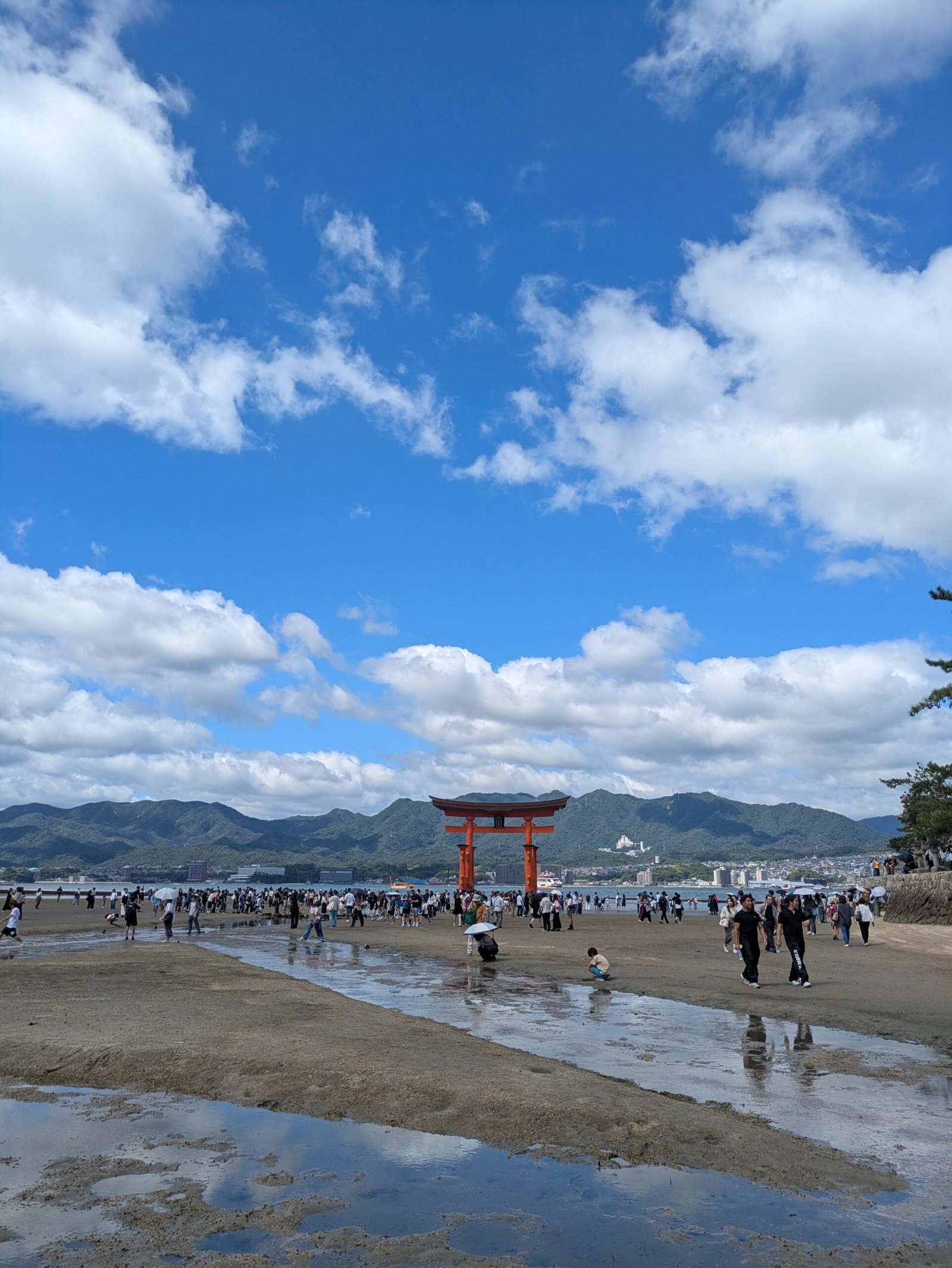
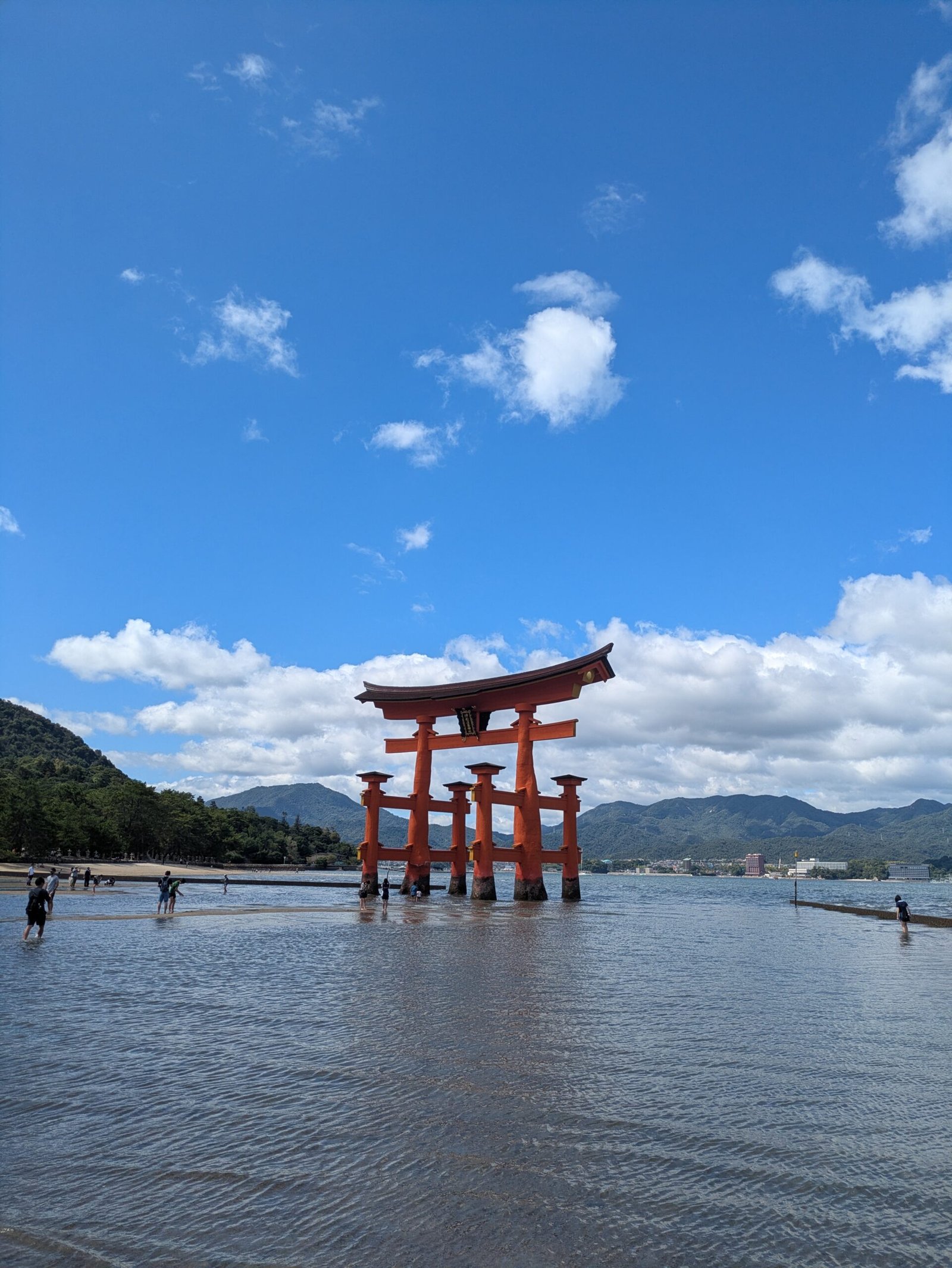
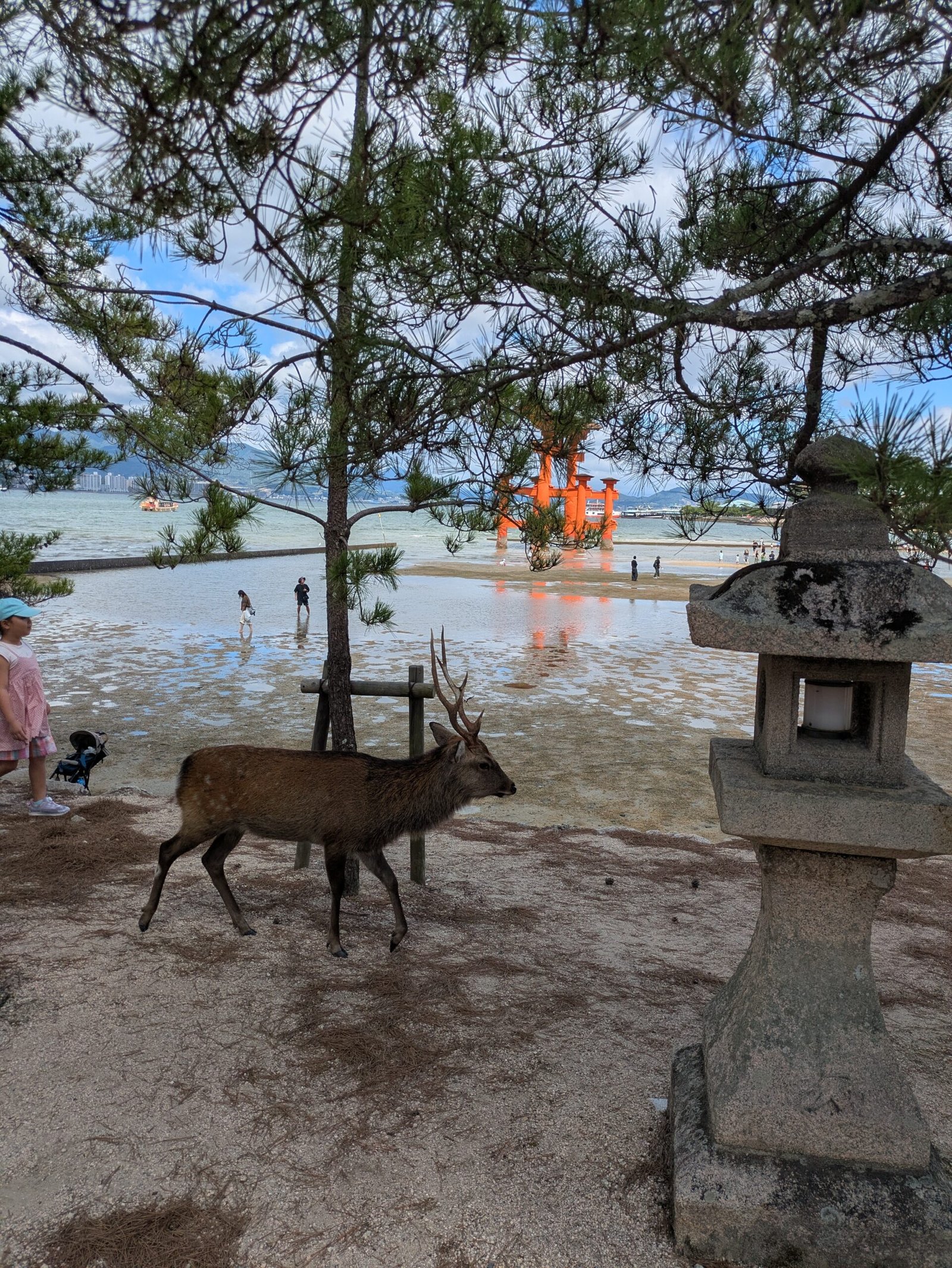
If you want to visit the floating torii gate and take pictures on the sandy shore before it, you’ll have to visit during low tide. Visiting during low tide allows you to walk directly below the gate. But if you want the real “floating” gate experience, where the gate appears to be buoyant over the water, visit when the tide is high. During high tide, you’ll be viewing it from about 100m–200m away at best.View Miyajima tide charts here.
What Else Is There to See and Do
1. Visit Otorii
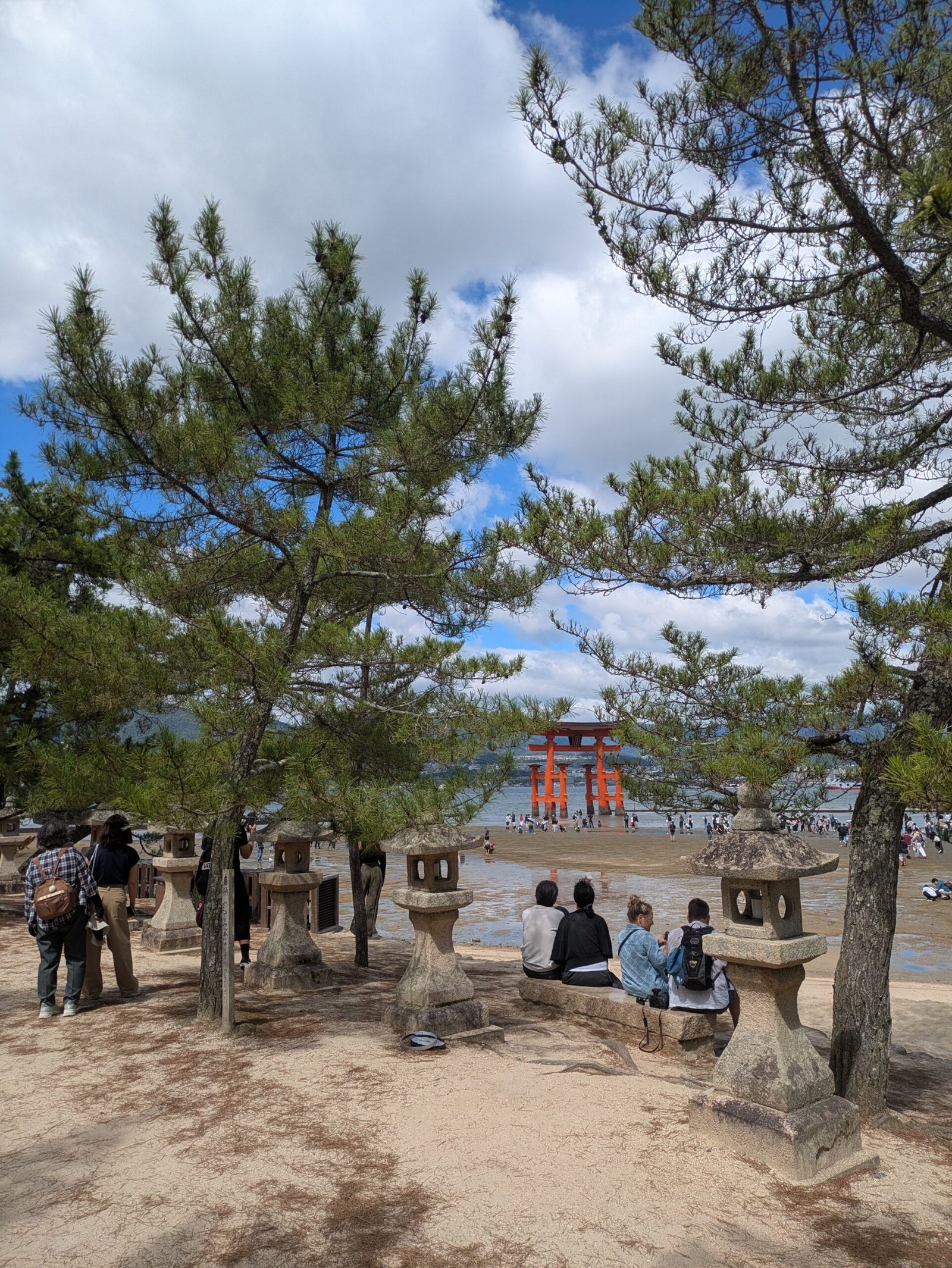
The floating shrine is the most popular attraction on the island — while we were there, the line to take a picture at a specific spot went back almost to the terminal!
2. Deer Encounters
Miyajima is home to a wild population of deer, like the famous Nara Park near Kyoto.
Although these ones don’t bow like the ones in Nara, they are numerous all over the island, including the town areas, beaches, paths, and roads.Many people feed the deer, but this starts a vicious cycle for them.
During my time on Miyajima, my partner and I walked 40 minutes to Tsutsumigaura Beach, and while we were sitting in the sand, a deer went after our maple cookies and rammed his antlers into my boyfriend to get to our snacks! Nobody was harmed, but a packet of dried squid did get lost in the battle. The deer can be quite cute, especially if they’re not a common animal where you’re visiting from, but beware, they will be aggressive if they sniff food.
3. Food
Miyajima is famous for grilled oysters, maple cookies, and citrus drinks.While we were there we sampled the cookies, and also had soft serve coffee ice cream. We enjoyed both, but highly recommend the ice cream! There are many stalls and restaurants in the main town area on the island, but they can be quite busy! At the exit of the ferry, there’s a Lawson convenience store for a quick and reliable bite.
4. Beaches and Swimming
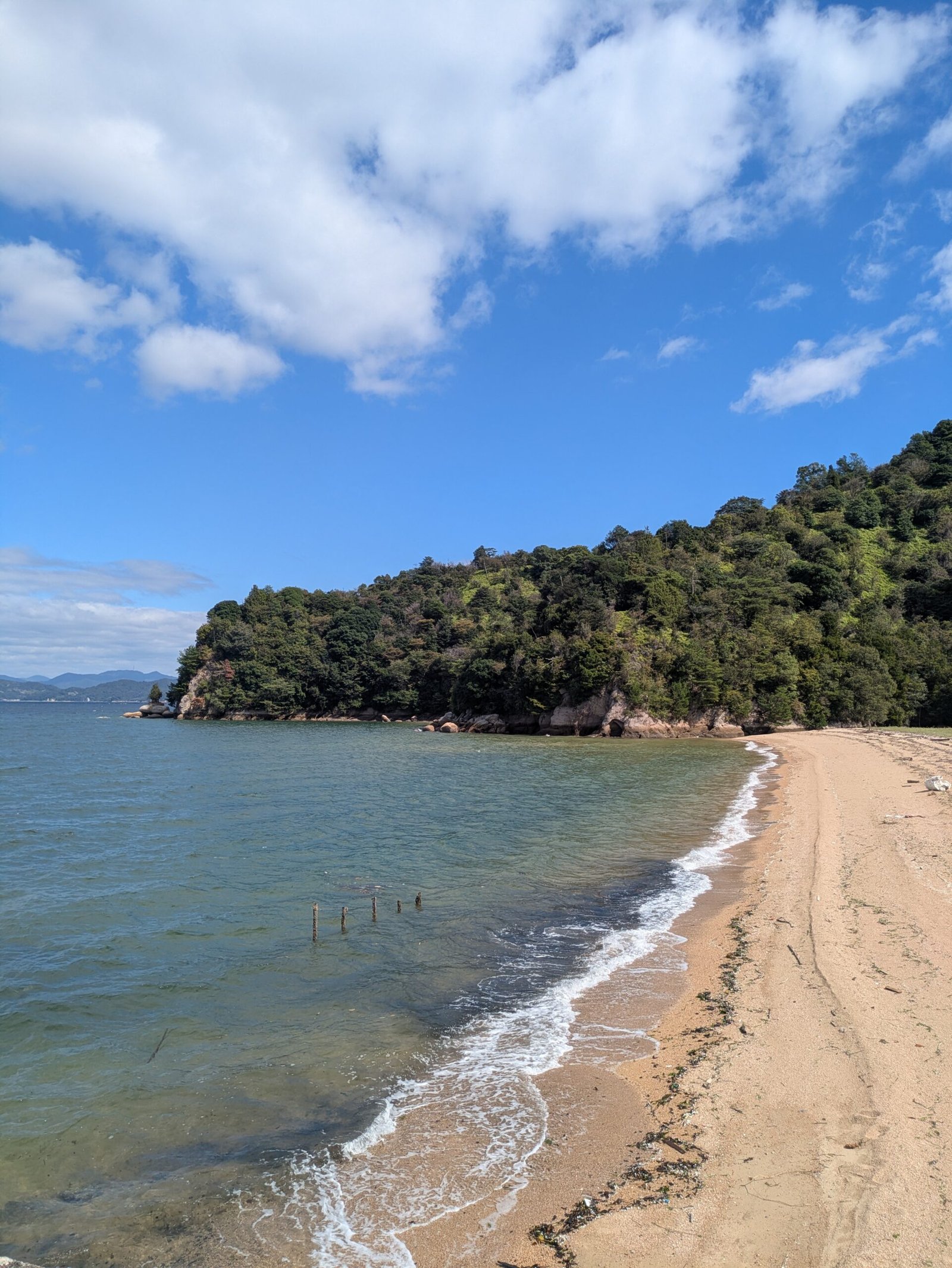
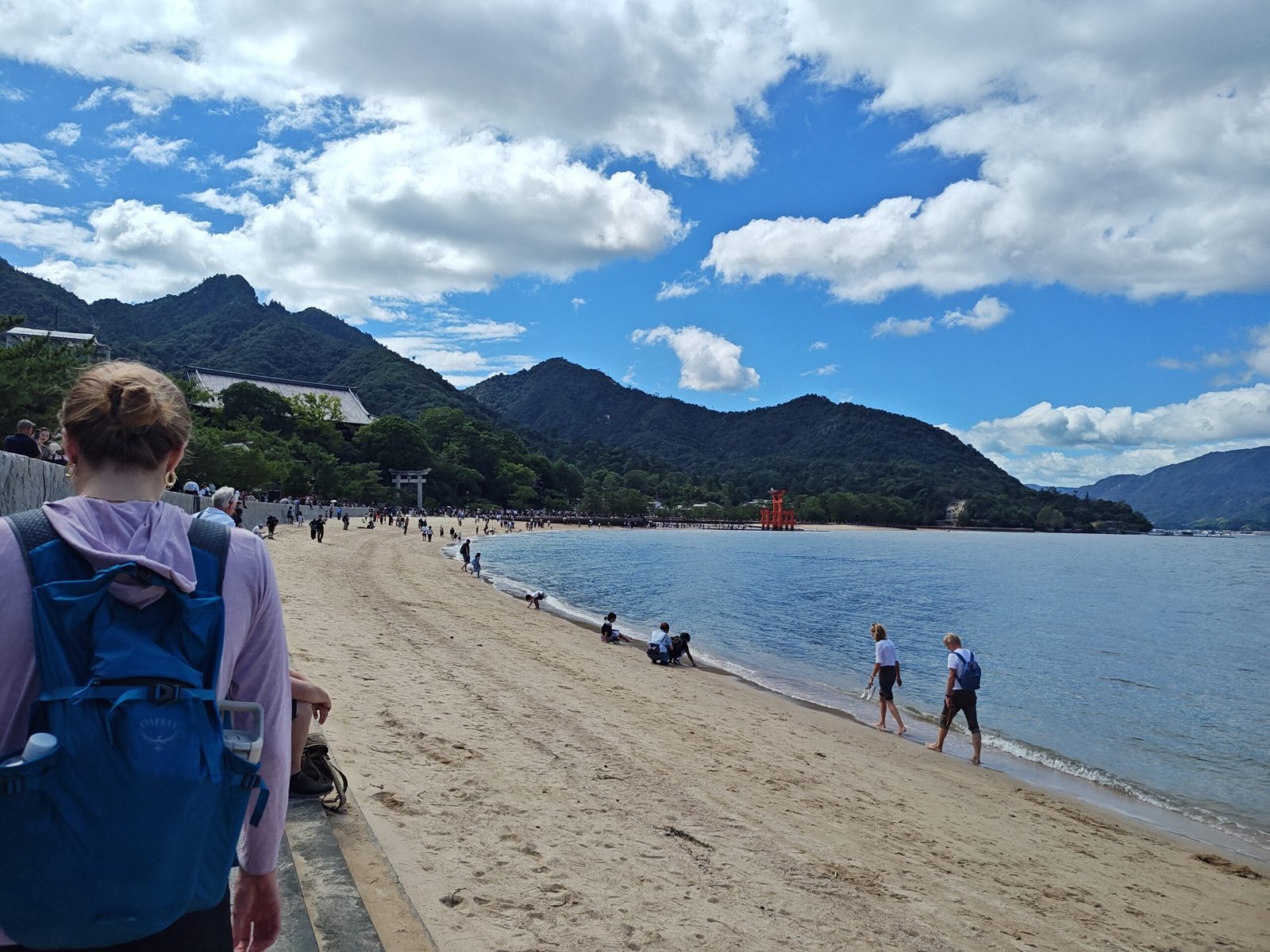
There are various nice beaches on Miyajima Island. There is a beach coastline surrounding the floating torii gate, but it is not recommended to swim there, as it is a sacred and very busy spot. We were on our third week in Japan, without having had the chance to swim in the ocean, so we walked 40 minutes to Tsutsumigaura Beach in hopes of cooling down in the salty water. This once used to be a popular swimming area, with a now-abandoned campground and vivid mountains backing it. Although we could hardly move in the crowds in the town area, at the beach we were two of six other people. This expansive beach is littered with plastic debris, and the ocean is covered in styrofoam blocks that break down both in the water and on shore.
Despite this, the water looked clean, but after getting attacked by a deer sitting on the shore, we decided against going for a swim. If you have a car, or rent a bike, there’s also Kashikiura Beach on the opposite side of the island. We didn’t have the chance to visit that far on foot, but I’d assume its seclusion would make for a cleaner swim.
5. Aquarium
Aquariums have mixed reputations, but if you’re looking for a safe family activity, you can visit the Miyajima Public Aquarium and learn about local marine life. Admission runs 1,420 yen for adults and 400 yen for young children — check the website for details.
Day Trip or Overnight?
If you plan your day trip ahead, it’s plenty of time to spend on the island. Spend the morning walking up Mt. Misen, visit Otorii while grabbing lunch in Miyajimacho, and rent an e-bike to visit one of the beaches in the heat of the day.
There are plenty of hotel options on Miyajima, all of which are more expensive than what you’d typically find on the mainland. The beaches are nothing to lust after, so for those two reasons, one day is plenty.
But an overnight trip might be worth it if you’re looking to snatch pictures of the floating gate at sunrise, or hike Mt. Misen before the crowds.
Best Time to Visit
The best time to visit is based on your goals. If you want to visit the floating shrine, go based on the tide charts. If you want to avoid crowds, head there early or take a late ferry. Miyajima is a very popular destination for both international and domestic tourists, so visiting during the week will ensure a less busy time.Unbeknownst to us, we visited during a week-long Japanese holiday, Silver Week, and the crowds were insanity! If you have a few days to choose from, keep holidays in mind.
Final Verdict: Should You Go?
Miyajima is worth visiting, but expect big crowds and plan ahead. If you were like us, expecting an afternoon at the beach, you might be a little disappointed with the beach debris, but that’s not the common goal for tourists there.Enjoy the floating shrine, grab a few island delicacies, and put your feet in the sand. That’s what it’s all about.